Monday, February 13, 2006

My thoughts for everyone today... if you are able, go for a walk with your family or have a picnic before the rain rolls back in later this week. Peace to you. Aimee Posted by Picasa

Families Ask Questions

Greetings Friends and Family! You have the right to know some things about me. Here are some questions most Frequently asked during interviews:

1. Aimee, why did you choose to be a child care provider?
Well, Besides that I have a great time being with and relating to children, it really comes down to the kind of experiences I had as a child. As a small child of a single parent family, I was left in the care of others while my Mother was working. I had some pretty awful experiences, but the worst over all, was the general feeling of being unwelcome and unwanted. I never want children to feel that while in care; the basis for all other learning experiences is a loving nurturing environment.

2. Aimee, What is your background in the Early Childhood field and how long have you been open at your own facility?
I have been in the Early Childhood field for about 12 years. I've done everything from being the Lead Teacher in Pre-K and Toddler rooms to subsituting for Preschool Teachers and providing administrative assistance to Center Directors. I began substituting in 2000 because it gave me the flexible schedule needed to open my own facility. Aimee's Playhouse has been open for 6 years this March.

I have 60 college units (attained at Sacramento City College), 40 of these units are in Early Childhood Education. I am about 3 classes away from an AA degree in ECE. My goal is to achieve a BA in Either Child or Human Development. I love the classes because I can bring so much back to the children in care at our facility. I will probably keep taking classes even when I graduate; working with children means being a life long learner. Things keep changing.

3. Aimee, what will my child's day look like at your Facility?
This is what our schedule looks like:
*7-10am Greetings/Snack/Indoor Activitity Opportunities
*10-12 Outdoor Discovery (exploring nature, science, math, and of course language arts and
working on social relationships and interactions).
*12-1 Prepare for Lunch/Eat
*1-2:30 Rest Time
*2:30-3 Wake Up/Buggy Ride
*3-5 Snack/Outdoor Discovery
*5-6 Snack/Indoor Discovery

Looks pretty compact? These are just blocks of time; we pack alot of activity in these time periods, with lots of out side time (rain or shine because we have an outdoor overhang), to develop play and encourage social interactions!

4. Aimee, could you tell me what the enrollment process looks like?
Sure. Click to visit official child care website; get a feeling for our environment and what we're all about. Next, call to schedule an interview (after 6 please. I'm not able to take my attention from the children during business hours), and/or a observation any time during business hours (7am-6pm) .

When you deceide that this is the right place for your family, I will provide you with references to call, a contract/handbook to sign, and a little bit of paperwork required by licensing.

5. Aimee, what is your license number and what is your capacity (the maximum amount of children you are able to care for)? SAC57143FCCH. I am able to care for no more than 8 children, however, I keep the ratios low by enrolling only 6.

Would you like to hear more? E-mail me @ madsqbls@aol.com


Posted by Picasa

Sunday, February 12, 2006

How to Use Our Site

To find out more about openings, and to see pictures of our environment please scroll down our site. Interviews are being scheduled now for the two summer openings (enrollment begins June 1st for full or part time positions).
For first time users of this site: pick a topic from the left and click; my profile is also on the left, or you can scroll down to browse through all articles and pictures.

Included in this site are
Hours of Operation, An Introduction to Our Facility (see article w/ the picture of children in the buggy), and Tips on Children and Parenting.

Parents are welcome to leave comments or e-mail me at: madsqbls@aol.com. All comments are also sent to my e-mail address and there I will respond.
I am not in competion with other facilities or centers, in that I believe our facilities are as uniques as the families who are seeking care; there has to be a variety of facilities to meet the needs of everyone. I have referrals and resources for child care subsidies (for those who are income eligible), as well as lots of other providers in and around the Land Park/Sacramento area.
 Posted by Picasa

Friday, February 10, 2006

Tips to Help Avoid Power Struggles with Your 2 Thru 5 Year Old

The following are my tips on communicating with young children -- and you thought it couldn't be done. It can take some time, and lots of patience, but communicating respectfully with your child means they will communicate respectfully with others. After all, it's probably too late when they reach their teens. Oh, and I know someone will have a few opinions about that!

1. 3 keys to Effective Communication: a. Get down at the child's eye level when speaking to them. b. Always use a calm quiet voice (save your loud voice for emergencies only -- like "Robbie, get out of the street!!"). c. Be sure you are in close proximity to the child when you are talking to them (about 1 foot away from the child per year; 3 year old, 3 feet away).

2. Praise Versus Encouragement?
Praise:
Strokes and compliments for a job well done.

The problem? Praise creates children who are not intrinsically motivated, but seek reward.

Encouragement: Little comments to motivate, and just enough help for children to achieve sucess.

The problem? None. Encouragement shows the child you are interested in what they are doing and that it matters. With observation, you can notice when a child needs a little assistance; pouring juice, putting a lid on a marker, etc.

3. Understanding Cooperation Versus Obedience:
Cooperation
enlists willful participation. Children want to be a part of the activity.

Obedience is manditory; the adult makes the child engage in the activity.
It helps if you offer the child 2 choices which have the same end result; "We're leaving. Would you like to walk or have me carry you to the car"?

4. 3 Qualities of Good Rules: a. They excite exactly the behavior you desire: "Inside voices while in the house." b. They can be relayed by 2 people; child to adult, child to child, adult to adult. Keep it sweet and simple: The refrigerator is not available right now. A child can in turn, communicate this to another friend or to another adult. c. Lastly, Everyone follows them. Consistancy is important. It's shows that there really are limits for everyone not just for some.

To sum this up; be close to your child, be observant when they need a little extra help and encoouragement. We want independent children who cooperate; and also achieve because they have a desire to not because of reward.

Good rules are simply stated as what you desire the child to do (not what you do not want them to do), are easily communicated and followed by all. Posted by Picasa

Friday, February 03, 2006

Behavior Tools for Parents

The following tips are from Rachel Cross, a professor who teaches Early Childhood classes at Sacramento City College's Davis Extention.
Intro:

One thing Prof. Cross stresed is that the tools mentioned are to be used when a child's behavior is to a point where normal limits and strategies are not effective, and that a parent/caregiver should try to examine why a child is behaving in an undesirable way. Parent tools are positive strategies to abuse. Abuse only serves to create feelings of diminished self esteem, resenment and anger, within the child as well as the abuser.

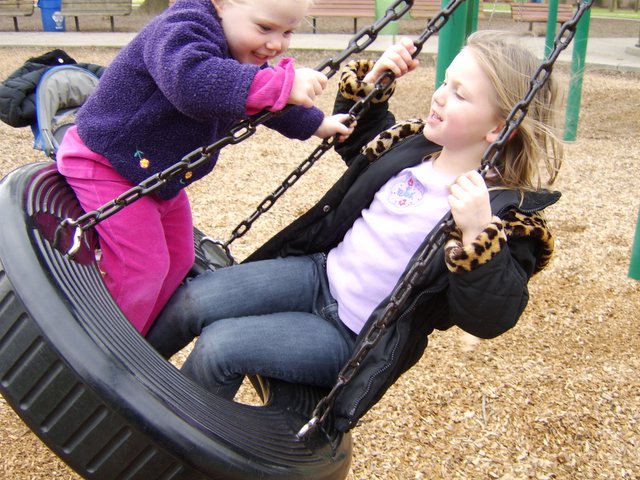
The picture I chose for this article is of two children getting along. But what if they were not? What would have to be looked at are the factors contributing to the behavior; their environment. For instance, are there enough supplies for everyone to use? is everyone using words? Is one or both of the children having difficulties for some reason outside of the care environment (death in family, divorce, abuse, or basic needs not being met). As I have said in other articles, the 3 basic teachers in a child's life are 1.Parents 2. Environment. 3. Relationships with caregiver(s). These 3 areas can give clues to behavior.

The first skill: TURNAROUND SKILLS (being intentional about restoring a desired state)
Young Child: Teach the child to initiate a new game after a conflict with peers.

Aimee says: We have to remember that just because children are not getting along does not make them unlikable. Even as adults we want to come back to the group and be accepted.

The second skill: CHOICES (Offering 2 or more choices that end at the same point)
Young child: Ask the young child "Would you like to walk to your bed or would you like me to carry you"?

Aimee says: Don't give choices that you're not willing to honor and don't bribe. The idea is for them to maintain their power and independence while staying within the
limits you have set.

The third skill: BEHAVIOR TRADE-OFF (Making a behavior difficult or impossible by rewarding a competing behavior).
Young child: Your child cannot watch T.V. and play in the back yard at the same time.

Aimee says: It amounts to taking your child out of the problem situation: you cannot be in the refrigerator while you are taking a walk.

The fourth skill: VERBAL REHERSAL (Creating a behavioral plan in advance to implement in an upsetting or dangerous situation).
Young child: Tell the child exactly what to do if they get lost in a store. Plan: find an employee of the store or a mother with children to help.

Aimee says: You are about to enter Toys 'R" Us to buy a present for your child's friend's Birthday party. Your child delays you because they want to look at everything in the whole store, and then they throw a fit because you wont buy them anything.

Next time verbalize the whole shopping trip to them before they enter the store, "Kate, we are here to Buy Tommy a Birthday gift. We are going to pass the doll section and go all the way to the back for legos. We are not buying any thing for you. We will buy the present and leave. When we are finished we can go to the park if you have followed the plan."

There are more tips available. This is just a sample. Q. & A.: if you would like to begin a discussion about problem behaviors please comment below... Posted by Picasa

Wednesday, February 01, 2006

For Families: a Peek at Our Day

Parents and families of children in care can frequently visit our site to get a glimpse of the kind of activities their children are involved in while here at Aimee's Playhouse. Today we went to the park. We were lucky. Not even 2 hours after we left it started to pour! Posted by Picasa
Slip-sliding away. Posted by Picasa
What are you looking At?? Posted by Picasa
Fun with friends at the top of the climbing structure.  Posted by Picasa
Pictures for Families of Aimee's Playhouse... We just made it to the park before the storm rolled in. Posted by Picasa

Monday, January 30, 2006

 Posted by Picasa

Aimee's Playhouse Infant Care and Preschool

Welcome Friends Family and Parents! This site is a forum for anyone who has children in their life, as well as a peek into what Aimee's Playhouse is all about. We foster life long learners. Some great features about care at our facility are: Homemade meals (3 snacks & 1 hot lunch).
We serve mostly vegitarian food. Children are encouraged to be choice makers, risk takers and to expand their creativity through an environment that is carefully created to achieve these goals. We offer
children long periods outdoors so they have enough time to become fully engaged in play and have a overhang in the back yard in order for us to play outdoors in poor weather. 6 seat Buggy rides are part of our weekly activities. There are no dittos offered, instead we learn through hands-on, meaningful experiences (ex: cause and efffect -using items in the water table- some float and some sink). The more experiences children have with their surroundings, the more they learn. We also prepare children for preschool by helping them develop empathy and concern for others. Pre-math, Early literacy and appreciation of the arts (music and mixed media) are incorporated into our curriculum. Preschool is M-F/9:30-11.

We are open M-F from 7am to 6pm. At this time we are full, with the next opening available in June (06). I encourage all parents who are looking at care to schedule and interview and at that time be placed on our waiting list. I also have referrals to other quality facilities in the area.
Posted by Picasa

Thursday, January 26, 2006

One Step Ahead (for ages 1-3) www.onestepahead.com

One Step Ahead is a great resource for new parents. when you visit their site you can find:

1. The Pac Back (carry your carseat--hands free) $39.95.

2. The Cradle Me Receiving Blanket (This blanket supports your newborn's head) $29.95

3. The Breastbottle Nurser (Comfoting nurser that infants accept more readily) $14.95

4. Clean and Comfy Shopping Cart Cover (Covers all of that dirty shopping cart seat) 29.95

I apologise for not rounding it off and giving you five, it just looks better. Some other cool items are Snuggle Sacks (they cover your child's car seat(hole for head) as they ride in the car, leaving them cozy, the 3 stage teethers (they develop to the needs of growing mouths and a huge assortment of safety items (magnetic door locks, stove knob covers, power strip protectors). Posted by Picasa

Stress and Mixed Age Groups

I heard from a Mother/Care Provider recently who was becoming "burnt out." The message I heard was "How can I care for younger children and at the same time keep the school age child I care for entertained? We have been taking trips to the park, visiting the "jumpy houses." Now he's been saying he's bored. I don't know how to keep every one happy. I'm so stressed out!"

This is my experience with mixed age groups; It can be challenging. If you have one older child and 2-3 preschool/toddlers, your school ager might become dependent on you to entertain him/her.

Here are some ideas that might work:
1. Take good care of yourself first. Physically, emotionally and spiritually. Make some time during your waking hours to do for yourself. Even something little like playing the music YOU like while you're with the children, taking up a hobby in your free time, joining a gym or what ever pleases you the most. You wont have anything to give anyone else if you have given it all away. Have a good support network of friends to share your day with when things get tough; if you do not, try journaling -- its a nice release.

2. Explain to your school age child in care that there will be times during the day when you are not going to be available to "play" because the younger children who cannot tend to their own needs need you. This is not to say you wont be there, it is just that you're asking this person to understand your responsibilities. Life is not always about entertainment. You can let this person know that their will be active and quiet times through our each day.

3. Ask your school ager to pack an activity bag from home for the quiet times during the day. this can include books, lessons/homework, and other toys that you and the parents have okay'd.

4. Encourage your older child to assist you; lead an activity; pass out snack; host a circle time, or ask him if he would like to read the children a book or help them with a book-on-tape. This gives him leadership skills and builds empathy. Let the parents of the child know that this is your goal, they're sure to appreciate it.

5. If you have an opportunity, invite or enroll a child of the same age and same sex. Developmentally speaking, school age children gravitate toward their own sex when choosing friend. Peers are begining to become an important part of their lives as independent individuals. In turn, this will not only build a friendship between them, but take a little pressure off of you to be the "entertainer."

6. Ask family members what interests this child. Ask the child himself. Books on subjects that entertain him can be purchased or checked out from the library. Craft sets, model sets,
games, puzzles.

Last summer I began enrolling school-aged children. I found out first hand by trial and error what worked for me and the individuals who attended. We made soap (when the toddlers were taking a nap), Beaded safety pins and strung them onto an elastic band (this was a great one--that engaged them for at least 2 hours).

It's not always easy to say exactly what will work. When you observe and connect with the parents you can tailor your activities to meet the needs of everyone in the group.


 Posted by Picasa


The Importance of Friends Posted by Picasa

Wednesday, January 25, 2006

Having Friends

These are the most important teachers in your childs early years (0-6):

1. Parents (Mother, Father, Siblings, Extended family and guardians --and any combination of these.
2. Environment (what is offered for child to explore)
3. Care givers (their relationship with your child and how they choose to arrange the environment, what is placed in the environment, and how they role model and how they handle conflict).

Number 3 is really dear to me as social relationships with others ARE THE ONE DETERMINING FACTOR IN SCHOOL AGE SUCESS. A provider's environment should offer activities which promote friendship and cooperation. Here are some great ones:

* Water table, Cooking in groups, Table Activites, and other activities which promote organization and sharing.
* Group art activites in which children have the opportunities to take turns/share.
* Opportunities for older children to assist younger or less experienced children such as group games, fingerplays, songs, caring for animals, etc.
All of these types of activities build MEGA SKILLS:
*Confidence: feeling able to do it
*Motivation: Wanting to do it
*Effort: Willing to work hard
* Responsibility: Doing what's right
*Initiative: Moving into action
*Perseverance: Completing what you start
*Caring: Showing concern for others
*Teamwork: Working with others
*Common Sense: Using good judgement
*Problem Solving: Putting what you know and what you can do into action
These are the values, the abilites, the inner engines of learning that determine success in school and beyond. We know they are important. Mega skills are not about getting an A on tomorrow's test. It's about getting an A in life.


Tuesday, January 24, 2006

Tips for Picky Eaters


Posted by Picasa Does your child act like you're trying to poison him everytime you offer broccoli?? Here are my favorite strategies to get your child interested in healthy foods.
First of all it is almost impossible to compete with the fast food industry when it comes to advertising. Aha! Parents posess something that they don't -- power to keep the T.V. to a minimum. I know, It's virtually impossible to filter out all the sources that push the "bad-for-you-food-that-tastes-oh-so-good": the grocery store's favorite place to put the candy is where? You guessed it-- right at the eye level of the kid in the cart at the check out lane.

Parents are the first and most important teachers in their childs life (oh, and you thought it was me--your friendly child care provider). Nope. Parents are role models; everything you do and say is being teletaped by your tot. Relax. You're a great person, with great habits. So what if your child still doesn't want to touch his goat cheese and spinach quiche? Weeelll, here are those tips I promised you;

1. As we grow older, our taste buds--well how do you put it--don't work as well as they did when we were younger. Ever see gram overload her soup with salt?? Aha... and it works in reverse for junior: plain, non-seasoned foods are probably just fine for your child. However, my daughter, she's an odd one; since she was 2 she's been able to eat purple onions like apples. Lucky for her, but not for me! Your child will give you cues, usually facial expressions indicating their like or dislike of the food offered.

2. We eat with all of our senses. Such is so true for junior; he even learns through all of his senses. If you offer a variety of colors and textures in small amounts your child is more likely to sample, and who knows, even like it!! And by the way, not alot of young people like their foods to touch. Separate please.

3. And this is a fun one because it also teaches your child some self competence skills; offer a mini buffet. when I say mini, I mean teeny. You're child's stomach is the size of her fist. Don't expect her to eat a whole lot of what is offered -- the fact that your child is even tasting it is reason for you to lavish them with all kinds of encouragement.

4, Don't forget to eat what the child is being offered. If you are eating cheetos and a coke, and they are being offered chicken stir fry you're not going to get the deal sealed! Now c'mon thats not really fair, is it??

5, Okay. Francine/Talulah/Mica/Shawndella/Esperanza/Miko will not touch a bite. You've been a good sport; what gives?? This is a great piece to understand: Your child grows in spurts unique to her (his) developmental needs. Therefore, there are going to be times when they just are not very hungry for lunch--even though they skipped breakfast! And in those times they may cling to some old standards. Did I hear anyone in the background say, Waffle?? Uh, oh. It's okay. In the worst case senarios, consult your pediatrician. They may recmmend a supplemental drink such as Ensure. You may need one yourself after all of the time invested in trying to get them to eat. Just kidding. Oh, and they'll probably give you the thumbs up for offering different healthy foods. Keep it up!!

6. Some times an oversion to a particular type of food can mean your child is allergic to it. I'm talking to you, milk, peanuts, legumes, wheat, eggs, soy... you know who you are. Do some research on what, if any, food alergies run in your family.

After a while children will eat some of what is on their plate. Be patient. One psychological trick that worked with my boys was "It's okay if you don't like it now, when you're bigger, you'll be ready to try different foods." One day my youngest said, "Look, Mom, I'm getting older; I ate some of my salad." So, I guess I only kinda tricked him?

I'm good but not that good. If I forgot any tips or you'd like to add some of your favorite strategies, please comment. I'll get 'em posted.

Saturday, January 21, 2006

The Benefits of Painting for Ages 2-5

Painting is one of the simplist activities for young children that offers the most benefits. Painting with simple colors, brushes purchased at a discount store, scrap paper, and small containers for paint are easily available and not expensive. Remember; to minimize messes, choose a place that children are free to create without too many restrictions. We chose a table outside where we can use a hose to spray any paint from concrete after the project and old tee shirts to protect their clothing. Parents; a great idea for the small budding artist in your family is bath tub painting. this involves the child (in clothes that you don't mind paint getting on), non-toxic paint, and sponges or brushes. I used to let my daughter sit in an empty bathtub in her diaper only with these items and paint away (always supervised). They love the experience, and the clean-up is easy.

Here are some huge benefits children experience from painting in a group setting:
*Children gain small muscle control
*Children become familiar with color("I made a
yellow sun")
*Children begin to experiment with color (I found that yellow and blue make green) Children also begin to create expressively ("I made a poison zucchini"). Children also learn to cooperate, share and learn the dynamics of working with a group.
Posted by Picasa

School Age Children Knit


Posted by Picasa knitting is a great skill which is easy to teach children between the ages of 6 and 12. It is something that they can do in the car on long trips, in a restaurant, or while waiting in the doctor's office. I can testify that as a Mother of three children between the ages 9,10 and 11, knitting relieves tension and illiminates bickering because they become so engaged in it. It also brings your family together; instead of everyone being in their bedrooms playing video games or entranced in T.V., knitting allows everyone to be in the same room doing the same thing.
Children are proud of their accomplishments and enjoy the process as well as the product of their efforts. A bonus is the confidence they feel as they teach their peers to master this skill.

For a great book ($17.95) to help teach children how to knit a host of fun and easy projects see
www.astitchaboveknitting.com