Thursday, May 18, 2006

Dough Play


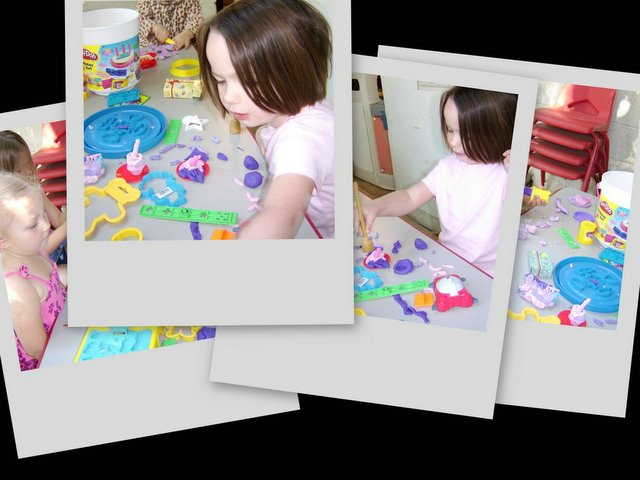
Our friends, dough tools and imagination.
Working out feelings, trying on different roles and using fine motor skills.
 Posted by Picasa

A Typical Day's Activities


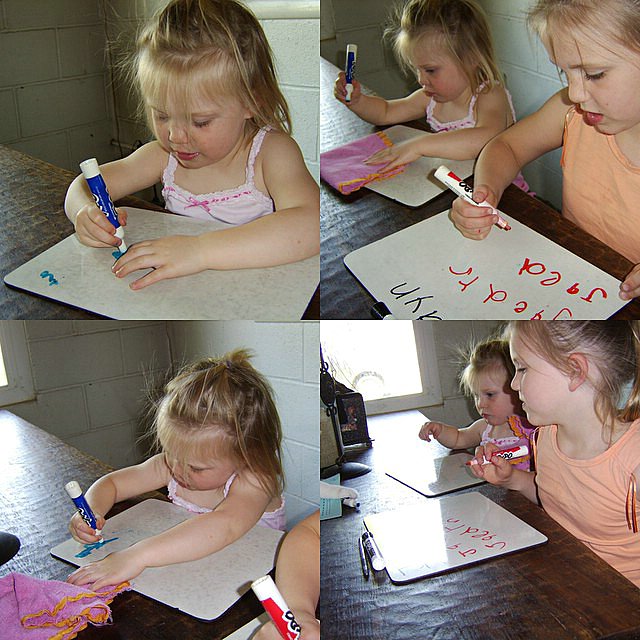
Typical daily activities: 1st picture - students practicing their name and becoming familiar with using writing instruments.

2nd pic - Animal bingo.

3rd pic - A child begins to use math concepts with color bears and flash cards.


 Posted by Picasa

Wednesday, May 17, 2006

Here's An Idea...

This is a fun post (click the green words)...
Instead of being a couch potato or vegging on the computer...

Do something outside with your kids!

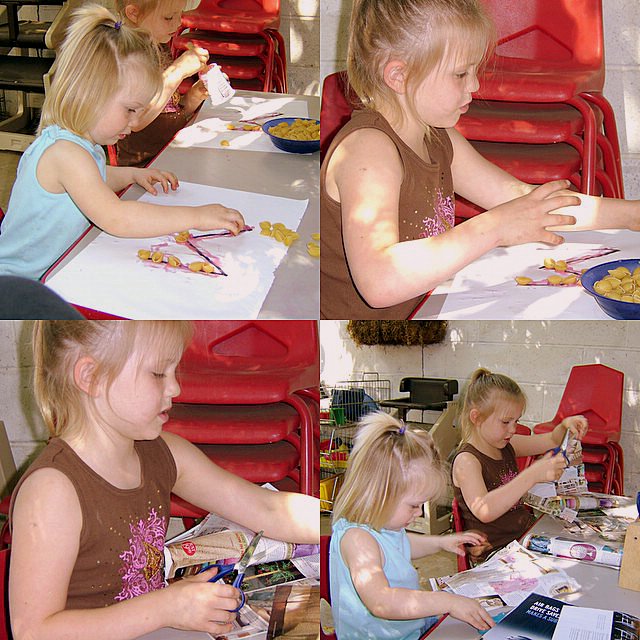
This month's letter; the letter "M." In this project our friends are gluing shell macaroni to an outline of the letter "M" and cutting out pictures that start w/ "M." Posted by Picasa

Tuesday, May 02, 2006

Clean fun

Today we used non-toxic liquid watercolor and an assortment of different sized brushes to "paint" soap. This is a fun activity which gives the child the power to start over again on the same piece of soap after washing in a tub of clean warm water. This group painted over and over again! Posted by Picasa

Monday, May 01, 2006

It's Spring!!

Painting with big brushes and Springtime colors! Posted by Picasa

Wednesday, April 26, 2006

Earth Week: Caring for Our Planet.

 Posted by Picasa
This was part of our "Earth" week theme; Helping take care of trees and plants helps our earth stay healthy; plants clean our air make food and homes for animals, feed us and provide shade.
Good job!

 Posted by Picasa

Today we used kitchen utencils with poster paint. This project promotes fine and gross motor skills, social skills and language develoment. Plus it was alot of fun! Posted by Picasa

Friday, April 21, 2006

Gak, Glurch and Goo, Oh My!!

Some call it "Gak," a recipe for strechy, slimey goo that kids love to play with. Click on this green sentence for the link to the recipe (Kinder art calls it "Glurch" but it's the same thing).
What can Children learn from this? Well, it's another one of those fabulous activities that promote self competence and team building skills.

It's also a (non-edible) cooking project. Though we did not make this batch today, making Gak is a good way to teach children measurement, and transitional changes that take place when things are mixed together and become something all together different, i.e. mixing cake ingredients together to make a wet mixture, baking and discovering a "dry" cake.

Very valueable science concepts.

 Posted by Picasa

Wednesday, April 19, 2006

Superunit


Our friends enjoyed a water play activity this morning.

It can actually be so much more than that upon closer examination. What they are engaged in is a "Superunit" activity. Which means that this particular water project can be used in more than one way, by more than one person and children can learn more than one concept from it.

Here are some discoveries children can make for themselves using this activity:
1. Some things sink while others float.
2. The ability to compromise and share while working in a group. Skills I try to promote as much as possible -- because we all want our children to be able to work in a positive way with others.
3. Balance. Hooking a scoop on a crane, filling a floating boat with sand, etc.
4. Cause and effect. If I crash into the water with my boat, it might get me wet.

Wednesday, April 12, 2006

Our Seasonal Art Collage in 3 Parts

Here we see our friends using markers to create images on their egg shapes. The picture collages below show that our friends are progressing through 3 steps of this project: 1. The begining (using markers, colored pencils) . 2. The middle, (the meaty part including scissors, glitter, stickers and other collage materials), and finally 3. The end (the finished product, clean up).

Traditional holidays are not celebrated here, instead we honor the first part of Spring in which birds laying eggs is a part. This week we have discussed eggs, what comes out of them who lays them, who does not, and how they hatch. Posted by Picasa
Glitter, Glue and stickers. The choice is really up to the individual. Choices are an important part of a young child's life; they develop self-competence, and make the activity fun! There is also some fine motor work going on -- pasting on paper, cutting and peeling the backs of stickers. Posted by Picasa
The finished product, and all of our friends pitching in and willingly cleaning up the left over paper scraps and glitter. This is important. Children who develop a positive sense of work can carry this attitude throughout their lives. Posted by Picasa

Motor Skill Activity

Our friends enjoyed a bean bag toss game this morning. It's easy and appropriate for all ages that are able to toss. This activity builds social skills (sharing, taking turns), Self confidence (the feeling of "I did it"!), hand/eye coordination (making the shot), and large muscle development. Posted by Picasa

Monday, February 27, 2006

Today's Project: Wooden Beads and Poster Paint

Today's art project involved many aspects of development. First the friends are learning to share the materials and take turns, while using their vocabulary. There is fine motor control involved as each child uses thier fingers to pick up the wooden bead and dip it in paint. This was not as easy as it looks. There was autonomy and independence in the project; all were able to have choices as to if they want to do it, what they wanted to use and when they were done. As you can see in the pictures below this one, Some of our friends mixed the paint and some used the dipped shapes to create lines. Alot of this is based on developmental level, and some is based on individual taste. Posted by Picasa

Not Mixing Paint; Creating Lines

Here, this friend is making lines with her shapes, a precursor to writing. She is being deliberate, careful and methodical with her newly aquired fine motor control. Posted by Picasa

Mixing Colors to Make Green

Our friends experimented with color while working with the beads & paint. Can you guess what color they made?  Posted by Picasa

Sunday, February 19, 2006

Emergent Literacy @ Home

The following are tips to help your child develop language skills at home (it is a "whole language" approach. The purposeful use of language is emphasized, rather than drill-practiced approach).
*
Give your child access to a variety of writing instruments; paper, pens, individual chalk boards, magnetic boards and letters, typewriters or computers (this can be free at the local library).

*Print rich environment: Label common objects in simple print, especially in their rooms, and dramatic play toys (kitchen structures and boxes with certain types of toys).

*The opportunity for children to tell stories verbally or act stories out through dramatic play.

*The display of children's stories, such as stories of personal events, or stories they have heard read to them which they have interpreted through artistic media. Adults write down what they have heard from the child about their art, to help develop the story.


 Posted by Picasa

Friday, February 17, 2006

Please Don't Let My Son Wear a Dress

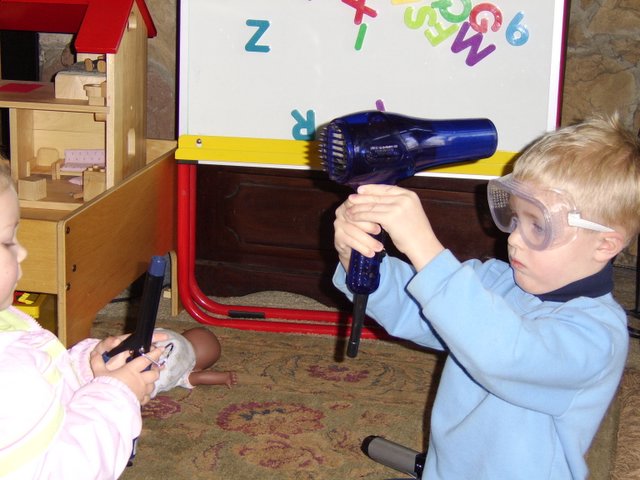
My thought for today: Helping children sort it all out. Some times parents cringe when they see their son, or any boy for that matter assuming a female role while engaged in dramatic play. My take on this is children work out situations thorough different types of play. When children play with a hair dryer, (much like this young man in the picture), it very well may be because he has seen someone close to him doing this. He wants to feel what it is like to do it himself. The same can be true for wearing dresses, heels or aprons; it allows children to try-on different roles and also to make sense of their own in relation to adults. It's not a permanent state or a glimpse into their preferences, just children working toward understanding their world.
 Posted by Picasa

Wednesday, February 15, 2006

Children, Art & Stress

The Thought for Today:
Children are more likely to express their feelings, thoughts and Ideas with pencils, crayons, pens, and finger paint.

Children may provide additional information after painting and drawing based on their art.

These stories can help them communicate their thoughts and feelings about stressful events that are often difficult to verbalize.

Why is this important? Art allows children to reconstruct experiences; frightening things can be made less scary, and children gain power and control.

I think the most important piece of this issue is that we want children, who eventually grow into adults, that are able to find ways of coping. I wonder if there are other really constructive ways we have discovered, as adults or children, to cope with really difficult feelings? Anyone??

 Posted by Picasa

Tuesday, February 14, 2006

Easy/Clean at Home Art

Roll-on Deoderant Bottles. Save your empty roll one deoderant bottles, pop the ball off, fill with watered down poster paint or tempura paint, pop the ball back on.
To extend and enhance the project:
*Use several pieces of news print (or cut big pieces down into small pieces). Cut into different shapes and sizes for fun.
*Encourage them to share bottles w/siblings, family and friends and encourage them to use their words; like asking for colors. Have fun.
 Posted by Picasa

Monday, February 13, 2006

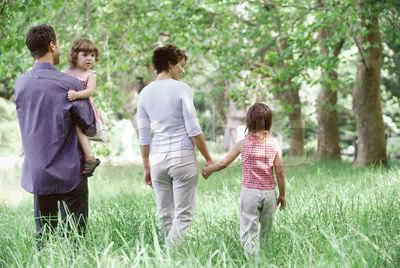
My thoughts for everyone today... if you are able, go for a walk with your family or have a picnic before the rain rolls back in later this week. Peace to you. Aimee Posted by Picasa

Families Ask Questions

Greetings Friends and Family! You have the right to know some things about me. Here are some questions most Frequently asked during interviews:

1. Aimee, why did you choose to be a child care provider?
Well, Besides that I have a great time being with and relating to children, it really comes down to the kind of experiences I had as a child. As a small child of a single parent family, I was left in the care of others while my Mother was working. I had some pretty awful experiences, but the worst over all, was the general feeling of being unwelcome and unwanted. I never want children to feel that while in care; the basis for all other learning experiences is a loving nurturing environment.

2. Aimee, What is your background in the Early Childhood field and how long have you been open at your own facility?
I have been in the Early Childhood field for about 12 years. I've done everything from being the Lead Teacher in Pre-K and Toddler rooms to subsituting for Preschool Teachers and providing administrative assistance to Center Directors. I began substituting in 2000 because it gave me the flexible schedule needed to open my own facility. Aimee's Playhouse has been open for 6 years this March.

I have 60 college units (attained at Sacramento City College), 40 of these units are in Early Childhood Education. I am about 3 classes away from an AA degree in ECE. My goal is to achieve a BA in Either Child or Human Development. I love the classes because I can bring so much back to the children in care at our facility. I will probably keep taking classes even when I graduate; working with children means being a life long learner. Things keep changing.

3. Aimee, what will my child's day look like at your Facility?
This is what our schedule looks like:
*7-10am Greetings/Snack/Indoor Activitity Opportunities
*10-12 Outdoor Discovery (exploring nature, science, math, and of course language arts and
working on social relationships and interactions).
*12-1 Prepare for Lunch/Eat
*1-2:30 Rest Time
*2:30-3 Wake Up/Buggy Ride
*3-5 Snack/Outdoor Discovery
*5-6 Snack/Indoor Discovery

Looks pretty compact? These are just blocks of time; we pack alot of activity in these time periods, with lots of out side time (rain or shine because we have an outdoor overhang), to develop play and encourage social interactions!

4. Aimee, could you tell me what the enrollment process looks like?
Sure. Click to visit official child care website; get a feeling for our environment and what we're all about. Next, call to schedule an interview (after 6 please. I'm not able to take my attention from the children during business hours), and/or a observation any time during business hours (7am-6pm) .

When you deceide that this is the right place for your family, I will provide you with references to call, a contract/handbook to sign, and a little bit of paperwork required by licensing.

5. Aimee, what is your license number and what is your capacity (the maximum amount of children you are able to care for)? SAC57143FCCH. I am able to care for no more than 8 children, however, I keep the ratios low by enrolling only 6.

Would you like to hear more? E-mail me @ madsqbls@aol.com


Posted by Picasa

Sunday, February 12, 2006

How to Use Our Site

To find out more about openings, and to see pictures of our environment please scroll down our site. Interviews are being scheduled now for the two summer openings (enrollment begins June 1st for full or part time positions).
For first time users of this site: pick a topic from the left and click; my profile is also on the left, or you can scroll down to browse through all articles and pictures.

Included in this site are
Hours of Operation, An Introduction to Our Facility (see article w/ the picture of children in the buggy), and Tips on Children and Parenting.

Parents are welcome to leave comments or e-mail me at: madsqbls@aol.com. All comments are also sent to my e-mail address and there I will respond.
I am not in competion with other facilities or centers, in that I believe our facilities are as uniques as the families who are seeking care; there has to be a variety of facilities to meet the needs of everyone. I have referrals and resources for child care subsidies (for those who are income eligible), as well as lots of other providers in and around the Land Park/Sacramento area.
 Posted by Picasa